The 2025 CIEEM Awards took place on Friday 20th June at Leonardo Royal Hotel Tower Bridge, London. It was an excellent and really positive day celebrating the achievements of individuals, projects and organisations in the ecology and environmental management sector. It was so uplifting to take time to focus on all that is good about our industry.
NGO Impact award
We are always happy to support CIEEM and never more so than at the CIEEM awards this year. Our MD Tom Smith was delighted to present our sponsored award, the NGO Impact Award, to the Canal & River Trust for their Unlocking Biodiversity Project. A huge well done to all involved.
In addition to sponsoring an award, we were also shortlisted in the following categories:
Promising Professional Award: Alan Yap – Highly Commended
Alan has demonstrated exceptional capability, professionalism, and leadership early in his career at RSK Biocensus. His technical expertise spans a wide range of projects, from complex residential developments to nationally significant infrastructure schemes, and he consistently delivers work of the highest quality.
Notably, Alan managed the £30k ecology package for a housing development in Kent, delivering a suite of protected species surveys, processing over 20,000 bat acoustic files, and authoring multiple detailed reports including an Ecological Impact Assessment (EcIA). He worked collaboratively with internal specialists and clients, ensuring on-time, best-practice outputs. Across additional projects in the New Forest, Folkestone, and West Sussex, Alan has led on survey design, reporting, and client liaison – all while expertly navigating ecological constraints and legal requirements.
Alan’s work is defined by both technical depth and people-focused leadership. He has trained and mentored junior colleagues in bat surveys and report writing, and proactively shares knowledge through internal webinars and training sessions. His maturity and initiative were recognised when he independently resolved sensitive ecological issues on site, such as managing risks around protected species during groundworks.
A developing specialist in bat ecology, Alan has taken steps to gain tree-climbing qualifications and is progressing towards a survey licence. His voluntary work with London Wildlife Trust and his efforts to promote diversity in ecology further highlight his commitment to making a meaningful impact – both within his profession and the wider community.
Alan’s aptitude for project management is exemplary. He consistently meets quality, financial, and scheduling targets and is trusted to lead increasingly complex projects involving multi-stakeholder coordination. His communication skills – written, verbal, and interpersonal – are frequently praised by clients and colleagues alike. Alan is not only an invaluable asset to RSK Biocensus but also an inspiring example of what early-career ecologists can achieve. His enthusiasm, technical acumen, and dedication to improving both ecological outcomes and team success have rightly earned him this commendation.
Member of the Year Award – Dr. Tim Graham MCIEEM – Winner
Tim joined RSK Wilding team in October 2022, bringing a wealth of experience as former Head of Natural Science and Analysis at the Office for Environmental Protection. Before that, Tim held senior roles at four Wildlife Trusts – Yorkshire, Lancashire, Manx, and Leicestershire & Rutland (as CEO for the latter two) – building a long record of achievement in protecting and enhancing biodiversity. His expertise and passion made him the perfect fit for our BNG- and habitat restoration-focused team.
Tim has always dedicated his spare time to conservation, co-founding and chairing the Lancashire Mammal Group, serving as Trustee of the North West Naturalist Union, and convening the British Ecological Society’s Conservation Ecology Special Interest Group. He has led numerous restoration and recovery projects, including the North West Lowlands Water Vole Project, Lancashire INNS, and the Lancashire Upland Peat Partnership, and raised millions for landscape-scale initiatives such as the Humberhead Levels Nature Improvement Area.
While CEO of Manx Wildlife Trust, Tim led nature reserve acquisitions and delivered key programmes like ‘Living Seas’ and ‘Living Landscapes.’ At the Office for Environmental Protection, he contributed vital insights to UK environmental policy, including the Environmental Improvement Plan, Nature Recovery Green Paper, and Biodiversity Net Gain (BNG) policy development.
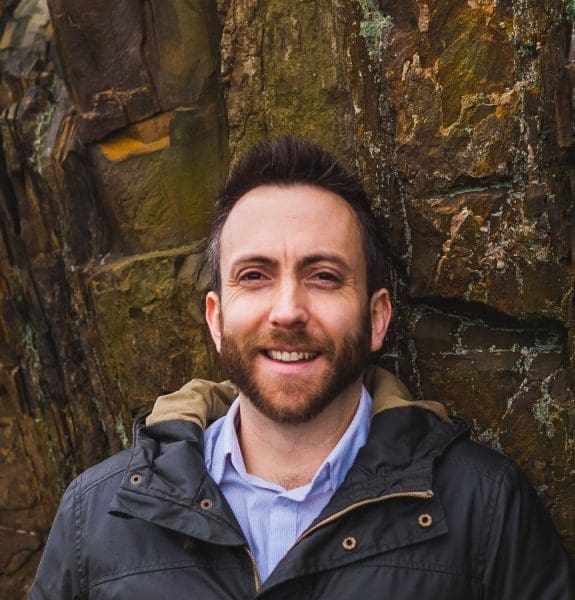
In 2024, Tim’s leadership helped establish RSK Wilding/ Biocensus as one of the UK’s most respected Responsible Bodies for BNG – a critical regulatory role ensuring high standards in nature restoration. He recently presented at a Defra conference, highlighting this achievement.
Tim is a restoration ecologist who thrives on collaboration and knowledge exchange to achieve landscape-scale outcomes. His strategic vision and passion for applying science to practice have driven significant advances in ecosystem restoration and nature recovery.
At Manx Wildlife Trust, he raised professional standards by introducing CIEEM guidance on ecological impact assessments. He promoted knowledge transfer nationally through the British Ecological Society and shared expertise as an Honorary Lecturer at the University of Liverpool. As CEO of Leicestershire & Rutland Wildlife Trust, Tim led organisational change and innovation to boost effectiveness.
Currently, Tim is leading CIEEM’s BNG Quality Assurance Pilot project with Natural England, developing mechanisms to ensure rigorous, high-quality BNG delivery. He is pioneering the integration of ecological and legal requirements through Conservation Covenants, setting new industry standards for BNG implementation.
Tim also authored the upcoming ‘Large-Scale Nature Recovery and Restoration’ guidance (due 2025) and is a prominent voice in the green finance and natural capital sector, working to unlock funding beyond BNG.
Tim’s voluntary contributions to CIEEM are remarkable given his busy schedule. He co-convenes the Ecological Restoration SIG and serves on the Audit Risk and Investment Committee. His work on the BNG Quality Assurance Pilot is instrumental in shaping CIEEM’s high standards.
He has been a strong advocate for Third Sector staff joining CIEEM, influencing organisational policies to support memberships and setting up peer support groups. Tim also served as Vice-convenor of the Academic Group. A fantastic line manager, Tim actively supports his team’s career development aligned with CIEEM’s principles, helping build a resilient and skilled workforce for our industry’s future. His partnership with our Senior Legal Advisor has been pivotal in evolving the Responsible Body into a national exemplar.
Tim’s career exemplifies outstanding dedication to biodiversity protection, innovation, and professional development, making him a truly deserving Member of the Year.
Best Practice award – Knowledge Sharing – Highly Commended
HS2 Ltd with EKFB contracting RSK Biocensus (through Temple) and Noise Consultants Ltd (through Pell Frischmann) HS2 – High-frequency noise recording for evidence-based bat impact assessments
High-Speed 2 (HS2), Europe’s largest infrastructure project, posed potential noise disturbance risks to a nationally significant population of bats – including the rare Bechstein’s bat – near Sheephouse Wood SSSI in Buckinghamshire. The original Environmental Statement and mitigation measures under the Bernwood Bat licence (WML-OR32) included long-term monitoring, yet overlooked the specific noise impact from certain construction equipment such as piling rigs. Furthermore, industry-wide gaps existed in understanding how bats perceive noise, particularly ultrasound (above 20kHz), which plays a vital role in bat navigation, hunting, and communication.
Recognising that standard noise data – focused on human hearing (A-weighted) – was inadequate for bat assessments, HS2 initiated a pioneering study in 2022 using unweighted noise measurements across 8kHz to 80kHz. Using specialised equipment (ApolloTM box and ultrasonic microphones), the project captured noise levels from various construction activities at multiple distances. This data, mapped to bat auditory ranges, allowed for a more accurate and evidence-based understanding of potential disturbance.
Findings informed impact assessments, securing assent from Natural England for works near the SSSI. The data was widely disseminated via the 2023 UK Bat Mitigation Guidelines, national conferences, and oversubscribed workshops. This work significantly improves ecological impact assessments, enabling more precise, effective, and cost-efficient mitigation strategies.
The project sets a new industry benchmark by aligning ecological understanding with acoustic expertise. It reduces unnecessary constraints and costly overmitigation by focusing on relevant noise frequencies, and offers a replicable methodology for broader industry use. The data also supports a co-sponsored PhD on bats and noise impacts from solar farms, further expanding its influence. Overall, this work bridges a critical knowledge gap, strengthens wildlife protections, and enhances sustainable infrastructure development through informed, collaborative approaches.
Best Practice award – Knowledge Sharing – Commended
RSK Biocensus and CR Construction Training and RSK Environment and Planning
Site Safety Training For Ecologists
RSK Biocensus, in collaboration with CR Construction Training, developed a unique practical safety training course for Ecological Clerks of Works (ECoWs) to better prepare them for construction site risks and compliance. ECoWs play a crucial role in protecting biodiversity and managing mitigation during construction but often lack early exposure to site safety. The course, launched in 2023, offers a realistic training environment covering site inductions, legislation, common hazards, machinery safety, and communication with site workers. It features practical demonstrations on machinery blind spots, underground utilities detection, and working at height, aiming to boost confidence and competence for ECoWs, particularly those early in their careers. Delivered four times to over 30 RSK Biocensus staff, the course expanded from a half-day to a full-day program based on attendee feedback and has also been adapted for early-career environmental managers within the wider RSK Group.
Post-course surveys indicate improved understanding of construction risks, enhanced communication skills, and greater confidence in site roles. The training has received positive feedback from health and safety staff and technical directors and has been run multiple times for graduate and placement students. By bridging the gap between theory and practical experience in a safe setting, the course helps raise the profile of the ECoW role, supports career progression, and contributes to more effective biodiversity management on construction sites. Given the growing UK infrastructure development, the need for trained and qualified ECoWs is critical. The program also benefits project managers responsible for ECoWs’ wellbeing. RSK Biocensus commits to training all its field staff through this course and aims to expand access via CIEEM, enhancing professional standards and recognition for ECoWs industry-wide
Large Consultancy of the Year – Highly Commended – RSK Biocensus Ltd
RSK Biocensus applies deep ecological expertise to every project, ensuring both nature-positive outcomes and effective client support. While grounded in traditional consultancy, the team also leads in Biodiversity Net Gain (BNG), evidence-based ecology, and knowledge sharing – helping restore nature at scale across the UK.
The company’s influence spans sectors, with notable contributions to the UK’s renewable transition. Since 2022, they’ve supported 17 solar and wind farms and five major grid connections. As BNG Technical Advisors to National Grid, they’ve shaped pioneering approaches on key projects such as Yorkshire GREEN and Bramford to Twinstead, advancing biodiversity outcomes across the energy sector.
Through their Wilding team, RSK Biocensus became one of England’s first Responsible Bodies, embedding habitat recovery into land management. The team also provides strategic BNG support to local authorities across Yorkshire, Nottinghamshire, and Leicestershire – helping deliver Local Nature Recovery Strategies and habitat restoration plans.
From innovative work on waxcap fungi at Llanishen Reservoir to bespoke badger and bat mitigation in Cheltenham, the consultancy’s solutions are creative and ecologically sound. Its unique Ecological Clerk of Works model saw over 70,000 hours of site work in 2024, ensuring protected species are safeguarded on major schemes like HS2
RSK Biocensus drives best practice through national guidance and platforms such as the UK Bat Mitigation Guidelines, Bird Survey Guidelines website, and the First Thursday Club – monthly webinars attended by a wide range of environmental professionals. Their co-authorship of Rebuilding Nature further cements their influence in ecological restoration.
Internally, staff development is championed through structured reviews, a dedicated Professional Development Manager, and access to a 93-module training library. Initiatives like ‘BNG University’, active CIEEM mentoring, and support for STEM outreach and apprenticeships ensure a well-supported, future-ready team.
With a sustainability strategy targeting 50% emissions reduction by 2030, and B Corp Certification underway, RSK Biocensus continues to raise the bar for ecological consultancy – combining scientific rigour, practical impact, and a strong commitment to the next generation of professionals.
CREDIT – CIEEM AWARDS WEBPAGE